By Mark Pam, Jos
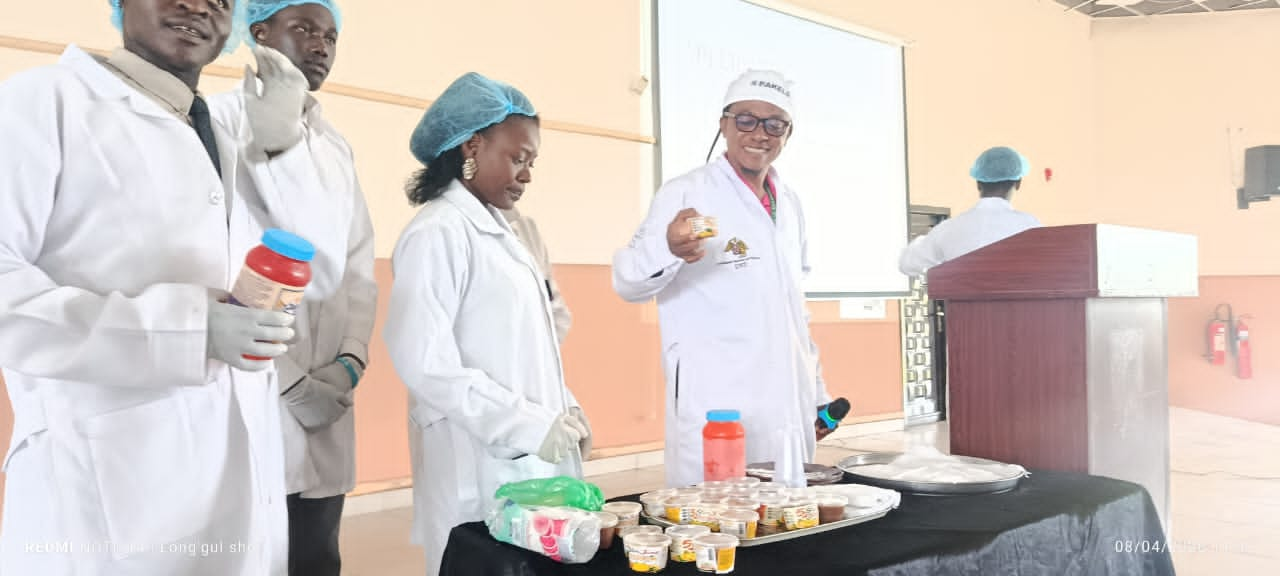
The University of Jos has showcased food products made by students to demonstrate how practical-based agricultural education can help tackle Nigeria’s food insecurity.
The products — bread, mayonnaise, pineapple jam and banana jam — were produced by 200-level students of the Faculty of Agriculture under AGR 206: Introduction to Food Science and Technology.
The exhibition was designed to display hands-on training in food processing, preservation and value addition, and to bridge the gap between classroom theory and industry application.
Deputy Vice-Chancellor (Academic), Prof. Joshua Pam Chollom, said the display reflects UNIJOS’ commitment to producing “finished-product” graduates with entrepreneurial skills.
“I feel proud seeing what our students are doing because that is the essence of establishing the University of Jos. It is not just about learning theory; our emphasis has always been on blending theory with practicals, and this is exactly what we are witnessing today,” he said.
Chollom described UNIJOS as a world-class institution with one of the highest numbers of international students in Nigeria.

He, however, lamented infrastructure deficits, noting the university receives over 50,000 applications annually but turns away many qualified candidates due to limited facilities.
He called on the Federal Government to increase investment in tertiary education, especially faculties of agriculture.
“If government provides the necessary resources and substantially increases investment in universities, particularly faculties of agriculture, they have the capacity to help feed this country through research, innovation and food processing,” he said.
Plateau State Commissioner for Water Resources and Energy, Hon. Bashir Lawandi Datti, commended the students and urged them to scale up production to meet market demand.
He said agriculture remains central to Nigeria’s economic growth and food sufficiency, and that the skills acquired by the students will contribute to national development.
Course lecturer, Prof. Olusegun Osibanjo, said the course was introduced under the NUC’s Core Curriculum and Minimum Academic Standards to equip students with practical knowledge in food science, technology and family life management.
He explained that students are taught to apply science and technology to process, preserve and add value to agricultural products for commercial purposes.
“The programme is designed to expose students to opportunities within the agricultural value chain and encourage entrepreneurship through value addition,” Osibanjo said.
He added that the Faculty of Agriculture has the capacity to contribute meaningfully to addressing Nigeria’s food security challenges