By God’spower Ede, Lafia
The history of the Kwararafa kingdom, also rendered as Kororofa, sits at the heart of debates about the political and cultural evolution of Nigeria’s Middle Belt.
Oral traditions, written chronicles, and modern scholarship offer different lenses on its origins, reach, and legacy.
Historically, Kwararafa emerged as a multi-ethnic confederation that dominated much of the Middle Belt from roughly the 14th to the 18th century.
Its capital shifted over time, but Wukari in present-day Taraba State became its most enduring seat. The Jukun formed the ruling elite, but the confederation incorporated Idoma, Agatu, Alago, Ebira, Eggon, Igala, Tiv and other groups.
The structure was both military and ritual. Kwararafa projected force through cavalry and archers, and it controlled trade routes linking the forest south to the Sahel north. Salt from the Benue valley, kola nuts, horses, and captives moved along these corridors. At its centre stood the _Aku Uka_, the divine king of Wukari, who functioned as priest-king and spiritual intermediary.
Origins and Migration Narratives
Jukun migration traditions trace the ruling group’s movement from the northeast.
One version holds that the Jukun came from the Arabian Peninsula through Western Sudan to Gazargamu in Kanem-Bornu, then south via the Mandara Hills, Kilba near Yola, and Pindiga before settling at Wukari. Fika served as an early base from which the first Jukun attack on Kano was launched. Bolewa and Karekare groups are described as offshoots of the Jukun stream.
Proponents of this line link Kwararafa’s emergence in the 1300s to pressure from Kanem-Bornu expansion and the decline of older powers like the Sao civilisation.
Indigenous and Archaeological Perspectives*
Scholars and Tiv and Eggon historians challenge the external migration thesis. They argue that peoples of the Benue valley, including Eggon, Angas, Birom, and Tiv, were present in the region as far back as the first century BC, within the orbit of the Nok civilisation. They contend that the “Emirate School of History,” shaped by Islamic scholars and colonial administrators, credited Middle Belt state formation to outside races, a view they label as the Hamitic hypothesis. From this angle, Kwararafa’s last headquarters before Wukari lay south of the Benue and Niger confluence at Loko, and pressures such as the transatlantic slave trade pushed Jukun-speaking groups northward into their present locations.
Both strands agree that Kwararafa was a confederation rather than a monolith, and that its reach extended across what are now 27 of Nigeria’s 36 states, from Idoma and Igala lands to Okene and beyond.
Rise, Power, and Military Reach
Between the 14th and 17th centuries, Kwararafa became a regional power. Kano Chronicles record repeated Jukun raids on Kano, Katsina, and Zaria, culminating in the sack of Kano in 1671. The kingdom’s resistance to Islam set it against northern Muslim states for centuries.
Its political model relied on ritual authority and tributary relationships. The Aku Uka collected tribute as far as Igala land until conflict with the Attah Igala, including the famous sacrifice of Princess Inikpi to build defensive walls, ended Jukun tax collection in that area. Annual gatherings like the _Puje_ festival still draw chiefs to Wukari, reinforcing ties to the Aku Uka. The Och’Idoma is regarded as a son of the Aku Uka, deriving authority from Wukari while holding First Class status in his own right.
Decline and Colonial Transformation
Succession disputes eroded the Aku Uka’s authority over diverse groups. External pressure intensified with the 1804 Sokoto Jihad, which targeted Kwararafa for its traditional religion and raids on Hausa states. By the mid-19th century, Sokoto and its emirates had fragmented Kwararafa’s territories. Wukari survived as a smaller traditional state under Fulani suzerainty, and came under British colonial rule by 1900.
Colonial administration further altered the balance of power in the Middle Belt. Some accounts note that British support for certain groups for economic and administrative convenience created new sources of conflict, particularly between Jukun and Tiv communities over land and political representation.
Legacy Today
The Aku Uka of Wukari remains a First Class chief in Taraba State and paramount ruler of the Jukun. Jukun political and religious institutions continue to influence Middle Belt kingship, including aspects of Igala royal tradition. Kwararafa is remembered as one of the few large pre-colonial states in the Middle Belt that resisted both Islamic expansion and British conquest into the late 1800s.
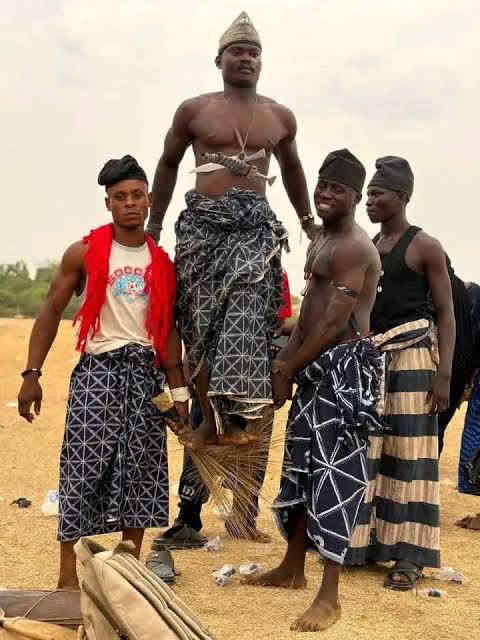
Cultural remnants persist beyond Taraba. Communities in Borno linked to Eggon, Igala, and Jukun warriors who did not return after campaigns in the Bornu Empire still maintain dance, language, burial rites, marriage, and dress patterns traceable to their Kwararafa roots.
Notably, the history of Kwararafa remains contested. Jukun oral tradition and some colonial-era studies emphasise migration from the northeast and a centralised kingship model. Tiv and Eggon historiography, supported by archaeological evidence of the Nok civilisation, stresses indigenous development and cautions against narratives that minimise local agency.
The debate reflects broader questions about how the Middle Belt’s past is recorded and who gets to define it.
However, this analysis is a summary view of three accounts of Kwararafa history sourced from the archives of Dr. Umbugadu Peter Francis, Francis Nansak and Professor Uji Wilfred Terlumun.
More accounts from other verified sources could help shape the narrative of the Kwararafa Kingdom for further documentation.